

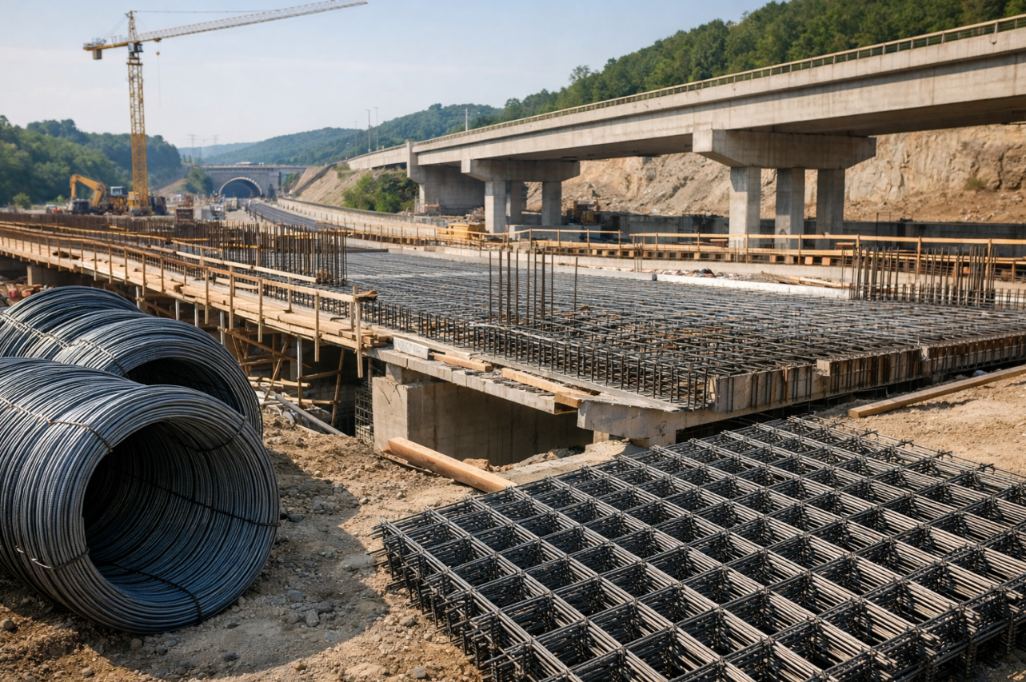
When you look at a modern infrastructure job, steel rarely shows up as a single “hero” product. It shows up as a system. Concrete carries compression. Steel carries tension. Details like spacing, laps, and anchorage decide whether the design feels solid on paper and also behaves well after the pour. That is where wire rod, and more specifically steel wire rod, fits in. It is not always the visible reinforcement you point at during inspection. Often it is the raw material behind the reinforcement products that keep schedules moving and cracks under control.
The Role Of High-Strength Wire Rod In Modern Infrastructure
High-strength wire rod matters because infrastructure work is repetitive and high volume. You place reinforcement again and again, across many pours, often with changing crews and tight weather windows. Steel wire rod arrives as a hot rolled steel product in coils, then becomes mesh, ties, strands, or other steel wire forms that support concrete and steel assemblies. In day-to-day procurement, “wire rod” can sound generic. In practice, you care about the steel grade, the downstream use, and how consistent the coil is from one delivery to the next.
In other words, you do not buy wire rod because it looks neat in a yard. You buy it because it becomes the pieces that make construction steel work the way your drawings expect.
Steel Wire Rod In Reinforced Concrete Structures
Reinforced concrete shows up everywhere in infrastructure: bridge decks, retaining walls, culverts, stations, portals, and foundations. Concrete takes the squeeze. Steel takes the pull. Traditional rebar remains the default for primary reinforcement in many structural elements, but steel wire rod plays a real role once you zoom in on how reinforcement is fabricated, tied, and placed.
If you have ever walked a site early in the morning, you have seen it. The crew is not debating theory. They want materials that place fast, hold position, and behave the same way across hundreds of meters.
Bridges, Overpasses, And Load-Bearing Concrete Elements
In bridge and overpass work, you usually see a lot of reinforcement bar and structural steel working together. Steel wire rod enters the picture through products that support placement speed and repeatable spacing, especially for distribution reinforcement, ties, and prefabricated cages. In tight areas, secondary reinforcement built from steel rods for concrete can reduce the time spent hand-tying every intersection.
High-strength grades also come up when the project targets higher yield strength for specific reinforcement products. For example, HRB500 appears in some supply catalogs as a high-strength option tied to construction applications and concrete structures. The key is simple: strength numbers help, but the reinforcement form and detailing still decide performance.
Slabs, Roadway Decks, And Large-Area Concrete Panels
Large slabs and roadway decks reward consistency. This is where wire rod-based reinforcement products can shine, especially when the job uses welded mesh or standardized tie solutions. When spacing is repeatable, placement errors drop. Labor demand drops too. That matters on projects where a missed chair or a rushed pour can turn into a crack pattern that never really goes away.
For slab work, steel wire rod is often more about process control than raw strength. You are buying repeatability.
Secondary Reinforcement Made From Steel Wire Rod
A lot of “reinforcement” on infrastructure sites is not the main bars. It is the supporting cast: mesh to control crack widths, ties to lock cages, and smaller steel wire elements that keep the assembly stable before concrete sets. This is where steel wire rod is most clearly at home. It is rolled steel that is meant to become other useful shapes.
Think of it as the difference between buying lumber and buying a finished door. Wire rod is the lumber. Secondary reinforcement is the door.
Welded Wire Mesh And Prefabricated Reinforcement
Welded wire mesh is a classic example. It often starts from hot rolled wire rod, then gets drawn, straightened, and welded into sheets or rolls. That mesh can support fast placement in slabs, pavements, tunnel linings, and precast panels. It also reduces on-site cutting and tying when the design fits the mesh geometry.
For infrastructure jobs that depend on speed, mesh can be a practical tool. It is not a shortcut. It is simply a different workflow.
Ties, Cages, And Support Components
Steel wire rod also feeds tie wire, cage wraps, stirrup tying solutions, and small support components that hold steel bars for construction in the right position. If cages shift during the pour, cover gets uneven and durability suffers. It is boring work, but it is the kind of boring that saves real money later.
This is also where carbon steel wire rod is common, because many of these components need toughness and predictable bending, not a fancy surface finish.
Steel Wire Rod Beyond Concrete Infrastructure
Infrastructure is not only concrete. It includes transport hardware, utilities, barriers, fastening systems, and industrial assemblies that support public works. Once you start listing those components, steel wire rod shows up again. Not always as “wire rod” on a drawing, but as steel wire, fasteners, springs, and formed parts.
This is why applications content tends to rank well. Buyers search for “what it is used for” when they are mapping a system, not just pricing a single product.
Transport, Utility, And Energy Infrastructure
Guardrails, cable trays, fencing, anchor components, and many utility supports rely on steel elements that begin as rolled steel in coil form. In utility corridors, small metal parts fail first. A loose tie, a weak fastener, a brittle clip. Those are not glamorous failures, but they create downtime and rework.
High-strength wire rod can support better performance in these small components when the downstream product requires higher yield or better fatigue behavior.
Manufacturing And Industrial Components For Infrastructure
Infrastructure projects depend on manufacturing: brackets, housings, connectors, and custom parts built off-site. Steel wire rod can feed manufacturing lines that produce hardware for precast yards, formwork systems, and maintenance equipment. Heat treatment may enter the story at this stage, depending on what the part needs to do. You do not need a deep metallurgy lesson to make a smart purchase. You do need to ask whether the downstream product requires a certain mechanical range, and whether the supplier can deliver it coil after coil.
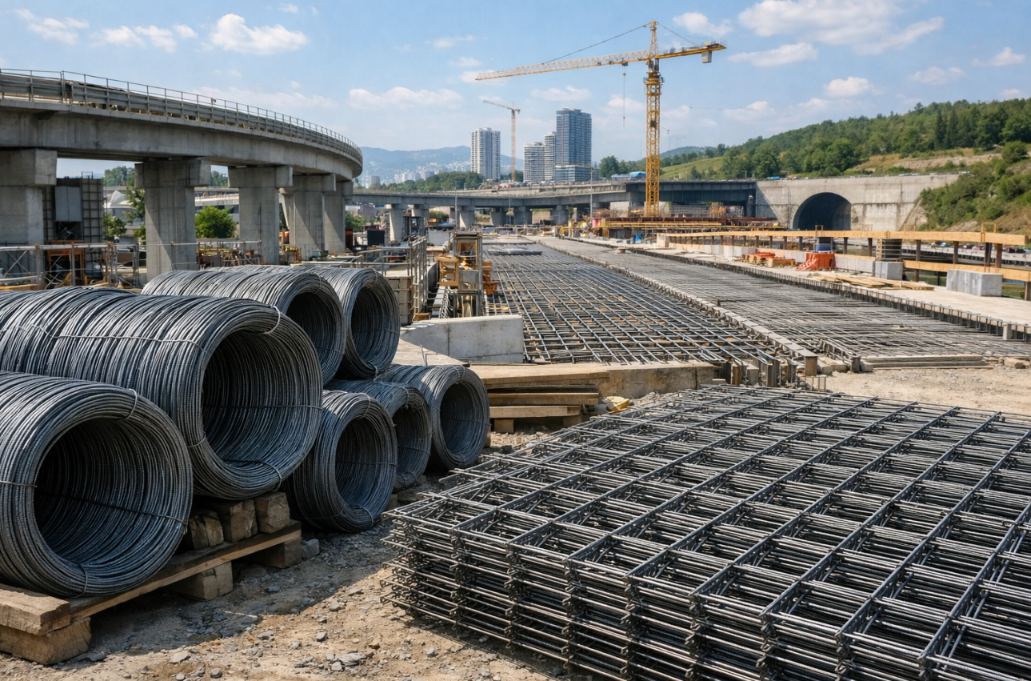
Cost, Efficiency, And Sustainability Of Steel Wire Rod
Most buyers do not worry about wire rod until something goes wrong. Then it becomes a project cost issue fast. A coil that feeds poorly can slow a mesh line. Variable properties can create rejects. In infrastructure, those problems multiply because you are not ordering “a little.” You are ordering truckloads.
Steel wire rod also has an environmental angle that is real, not marketing fluff. Steel is widely recycled, and infrastructure owners care about lifecycle stories more than they did ten years ago.
Material Efficiency And Project Cost Control
High-strength options can reduce the amount of steel needed in certain designs, but cost control also comes from stable processing. If the downstream product is mesh or ties, you care about straightening behavior, weld consistency, and bend performance. When those are stable, labor stays stable. That is a big deal on jobs where labor is the true bottleneck.
Price per ton matters, but it is not the only number that hits your budget.
Recyclability And Long-Term Sustainability
Steel’s recyclability helps infrastructure projects meet sustainability targets without forcing risky material substitutions. The practical side is simpler: steel wire products have known recycling streams, and scrap handling is familiar on most sites. That reduces friction during demolition, repair, and retrofit work.
Specifications And Standards For High-Strength Steel Wire Rod
Applications tell you where steel wire rod is used. Specifications tell you what you should actually buy. This is the section that keeps procurement and engineering aligned. It also prevents a common mistake: comparing “wire rod” as a general term while ignoring grade, standard, and processing route.
A good spec conversation starts with strength level and diameter range, then ends with standards and documentation.
Strength Levels And Diameter Ranges
High-strength steel wire rod is often selected when the downstream product needs higher yield strength, tighter performance bands, or better fatigue behavior. In some markets, HRB400 and HRB500 appear as common high-strength references in steel reinforcement catalogs. Diameter depends on the end product. Mesh wire, ties, and formed components each land in different ranges. What matters most is not “bigger is stronger.” It is whether the coil supports stable drawing, stable welding, and stable bending.
Common Standards For Infrastructure Projects
Infrastructure supply chains cross borders, so standards matter. Sunrise New Material lists common rebar standards such as BS4449, GB1449.2, JIS G3112, and ASTM A615/A615M in its product descriptions, which reflects how often projects need cross-standard sourcing. For steel wire rod procurement, ask for the relevant standard, the grade, and the mill test documentation. If your project has audits, traceability is not optional.
Conclusion Where Steel Wire Rod Makes Sense In Infrastructure
Steel wire rod makes the most sense when your infrastructure project benefits from repeatable reinforcement products and stable processing. It is a strong fit for mesh, ties, cages, and many secondary reinforcement needs. It also supports a long list of transport and utility components that quietly keep infrastructure running.
If your decision is really “wire rod or rebar,” rebar usually remains the safer pick for primary structural reinforcement. If your decision is “how to build the reinforcement system faster and more consistently,” steel wire rod often becomes part of the answer.
A Reliable Supply Partner For Infrastructure Steel Projects
If you source steel for infrastructure, you need a supplier that can match grades, documents, and delivery cadence without drama. Qingdao Sunrise New Material Co., Ltd. positions itself as an international supplier of steel and non-ferrous metal raw materials, built around a one-stop supply model and a broad product range that includes carbon steel categories and wire rod. The company states it has passed ISO9001:2015 quality certification, which matters when your purchasing process includes QA checks and repeat orders across multiple job sites. Sunrise New Material also notes customers across more than 100 countries and regions, which signals experience with export packaging, documentation, and cross-border requirements that often slow down first-time buyers. If your main concern is not “Can you supply steel?” but “Can you supply the same steel again next month, with clean paperwork?”, this is the kind of profile you want on your shortlist.
FAQ
Q1: What is steel wire rod used for in infrastructure projects?
A: You mainly see steel wire rod show up as the raw material for welded wire mesh, ties, cages, and a lot of small steel wire components used around concrete, utilities, and transport hardware.
Q2: Can high-strength wire rod replace rebar in concrete structures?
A: Not in most primary structural roles. Rebar is still the standard choice for main load paths. High-strength wire rod is more common in mesh, ties, and other reinforcement products that support the system.
Q3: Where does steel wire rod add the most value on site?
A: Anywhere you want repeatable spacing and faster placement, like large slabs, pavements, and precast work. It also helps when you want steadier fabrication of ties and cage components.
Q4: What specs matter most when you buy steel wire rod for infrastructure use?
A: Grade, standard, coil consistency, and mill test documents. Then check what the downstream product needs, like weld behavior for mesh or bending behavior for ties.
Q5: How do you vet a steel wire rod supplier for a long project?
A: Ask for past shipment consistency, traceability documents, standard compliance, and how they handle repeat orders. If the supplier cannot keep properties stable across batches, your fabrication line pays the price.