
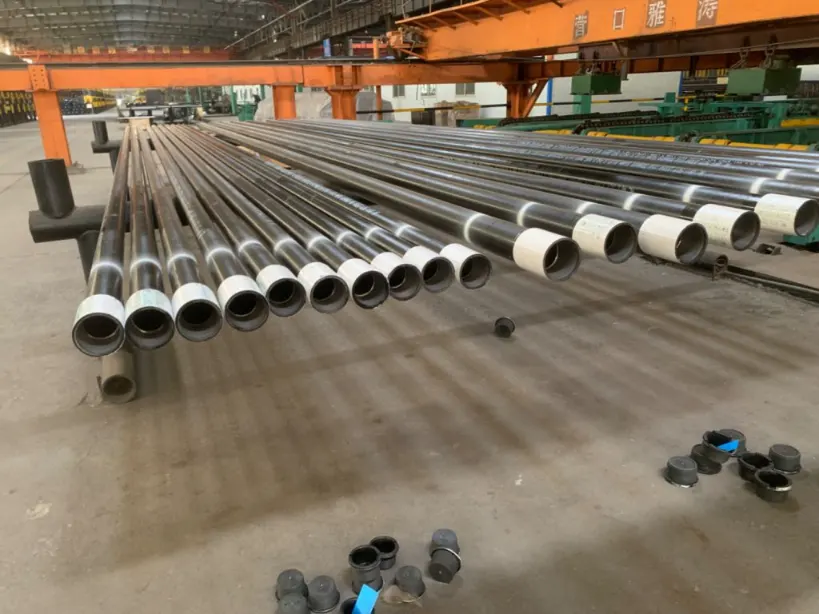
If your line runs hot all day, pipe selection stops being a simple price comparison. The wrong standard can still pass installation, then annoy you later with leaks at joints, unexpected inspection pushback, or shorter service life when heat cycling becomes routine. This guide compares ASTM A106 vs ASTM A53 in plain project terms, so you can pick the right carbon steel pipe for high-temperature service without guessing.
Overview Of ASTM A106 And ASTM A53
These two standards show up together because they share similar use cases in steam, water, gas, and air piping, and both support forming work like bending and flanging. The key difference is what each standard is mainly built for: A106 leans toward high-temperature duty, while A53 is more of a general mechanical and pressure pipe standard.
What Is ASTM A106 Pipe
ASTM A106 covers seamless carbon steel pipe intended for high-temperature service. In real projects, Grade B is the common pick because it balances strength and availability, while Grade C exists for higher performance needs.
What Is ASTM A53 Pipe
ASTM A53 can be supplied as seamless or welded (including electric resistance welded and furnace butt-welded types). It is typically used for mechanical and pressure applications at ambient or moderate temperatures, not as the “default safe choice” for sustained high heat.
Manufacturing Differences
In procurement meetings, people often say “seamless is safer” and stop there. That’s a bit lazy, but the pipe type does matter because it changes how your line behaves when conditions get harsh. Treat this section as a quick filter: if your spec or service demands seamless-only, the decision tightens fast.
Seamless Only For ASTM A106
ASTM A106 can only be made from seamless pipe. That single rule is why A106 gets called out so often in hot service.
Seamless Or Welded For ASTM A53
ASTM A53 can be seamless or welded. That flexibility can reduce cost and shorten lead time, but it also means you must pay closer attention to what you are actually buying, especially if your system is sensitive to long-term thermal stress.
Temperature And Service Capability
This is where most decisions become clear. If your line is a true high-temperature duty line, you usually want a standard that is written with that stress in mind, not a “works in many places” standard. The table below gives you a fast, practical comparison before you dive into details.
Table: Key Differences Between ASTM A106 And ASTM A53 For High-Temperature Service
| Item | ASTM A106 | ASTM A53 |
|---|---|---|
| Intended Service | High-temperature service | General mechanical and pressure service |
| Allowed Pipe Type | Seamless only | Seamless or welded |
| Typical High-Heat Fit | Better match for sustained heat | Usually used at ambient to moderate temperatures |
| Structural Risk Point | No weld seam | Weld seam may exist (type-dependent) |
| Grades | A, B, C | A, B |
| Grade B Strength Level | Similar baseline to A53 Grade B | Similar baseline to A106 Grade B |
| Size Range (Common Standard Range) | Up to larger NPS range | Typically smaller NPS range than A106 |
| “When It Goes Wrong” Pattern | Chosen to reduce hot-service risk | Misapplied into hot duty, then problems show up later |
The simple takeaway: if temperature is the main concern, A106 usually fits the intent better. If temperature is moderate and you want flexibility on pipe type, A53 can be reasonable.
Why High Temperature Changes The Rules
High temperature is not just a number. It means thermal expansion, cycling stress, and long operating hours. If the pipe sits in hot service day after day, the standard’s scope matters. A106 is explicitly scoped for “seamless carbon steel nominal wall pipe for high-temperature service.”
The “Seamless” Question You Actually Care About
Plenty of welded pipe runs fine in many systems. The issue is whether your project is tolerant of extra risk points under heat and pressure. If your spec language looks like seamless pipe for high temperature service, it is usually pointing you toward A106-style intent, not general service.
Chemical And Mechanical Differences That Matter In Practice
Most buyers don’t need a chemistry lecture. What you need is the one or two differences that can change behavior in hot service and change how inspectors react to your documents.
Silicon Requirement Is A Real Divider
One notable chemistry difference: A106 includes a silicon requirement (not less than 0.10%), while A53 does not specifically require silicon. That requirement is often discussed as part of why A106 is positioned for high-temperature service.
Grade B Strength Looks Similar, But The Scope Does Not
For Grade A and Grade B, tensile and yield requirements are often the same between the two standards, which is why people treat them as “close.” The trap is assuming “close” means “interchangeable in hot service.” It doesn’t. The scope and pipe-type rules still drive the safer choice.
Dimensions, Schedules, And What Buyers Ask For First
After you pick the standard, the next fight is usually size and wall thickness. This is where RFQs get messy, because people mix NPS, DN, and schedule language in the same email thread.
Size Range Differences
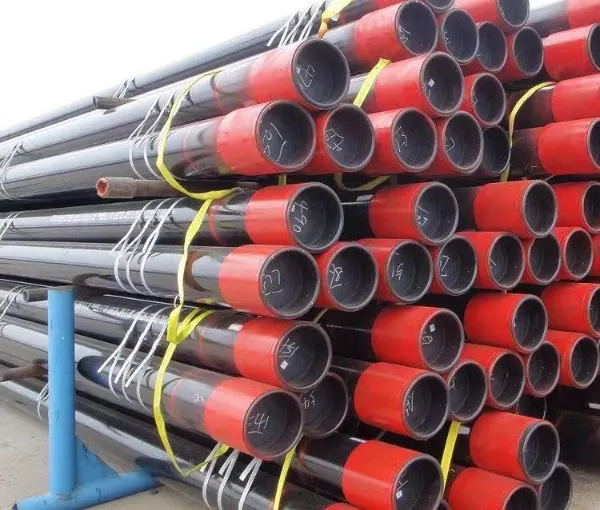
One commonly cited dimensional difference is that A53 is often listed up to NPS 26, while A106 is often listed up to NPS 48 (with both standards allowing other sizes if requirements are met). If your project needs larger diameter hot-service pipe, that’s a practical reason A106 shows up more.
Schedule Range You Can Quote And Buy
If you are sourcing through a supplier that lists broad options, you will often see wall thickness options such as SCH10 through SCH160, plus XS/XXS/STD, and outside diameter coverage such as φ10–1200 mm for A106 listings. Those details matter when you need to match pressure class without redesigning the whole line.
Decision Guide: Which One Should You Choose?
Nobody wants a five-hour debate for a pipe order. Use these quick rules to keep it sane.
Choose ASTM A106 When Heat Is The Main Story
If the system is sustained hot service (steam, hot process lines, boilers, power plant duty), ASTM A106 is usually the cleaner fit to spec intent. If you are building your RFQ around a product page or datasheet, keep the standard and schedule language aligned, then link internally to your product reference such as ASTM A106 seamless carbon steel pipe.
Choose ASTM A53 When Service Is General And The System Is More Forgiving
If the duty is ambient or moderate temperature mechanical and pressure piping, and the project accepts welded options, A53 can be cost-effective. Just make sure the pipe type (seamless vs welded) is clearly stated. “A53” alone is not a full purchase description.
A Small Human Tip That Saves Time
If a project team starts arguing in circles, ask one question: “What is the maximum operating temperature and how often does it cycle?” The room usually goes quiet for a second, then the right choice shows up.
Sunrise New Material (Qingdao Sunrise New Material Co., Ltd.) Introduction
Sunrise New Material (Qingdao Sunrise New Material Co., Ltd.) presents itself as an international supplier of steel and non-ferrous metal raw materials, with customers in more than 100 countries and regions. The company states it has passed ISO9001:2015 and emphasizes customized supply solutions backed by a strong supply chain network. It also describes investments in production lines that include seamless steel pipes and related steel products, plus multiple warehouses in major domestic ports to support timely delivery. For buyers who need documentation support, the site showcases certificates such as BV, TUV, and SGS, which can help when a project requires supplier qualification files. If your goal is fewer surprises from order to site, that mix of capacity, warehousing, and paperwork readiness is exactly what many EPC and industrial buyers look for.
FAQ
Q1: Can ASTM A53 Be Used For Steam?
A: It can show up in steam lines, but if the steam is truly high-temperature and runs hard for long hours, A106 is usually the safer match to high-temperature service intent.
Q2: Is ASTM A106 Always Seamless?
A: Yes. A106 is seamless-only, which is one reason it gets specified for tougher duty.
Q3: What Is The Fastest Way To Decide Between A106 And A53?
A: Start with operating temperature and how often the system cycles hot and cold. If heat is constant and critical, lean A106. If service is general and moderate, A53 can work.
Q4: If Grade B Strength Is Similar, Why Pay More For A106?
A: Because the standard scope and requirements are built around high-temperature service. In hot duty, that intent matters as much as strength numbers.
Q5: Where Do Buyers Make The Most Common Mistake?
A: Ordering “A53” without stating seamless or welded, or using a general-service choice in a line that is actually hot duty. That mistake often looks fine at delivery, then turns into headaches later.