

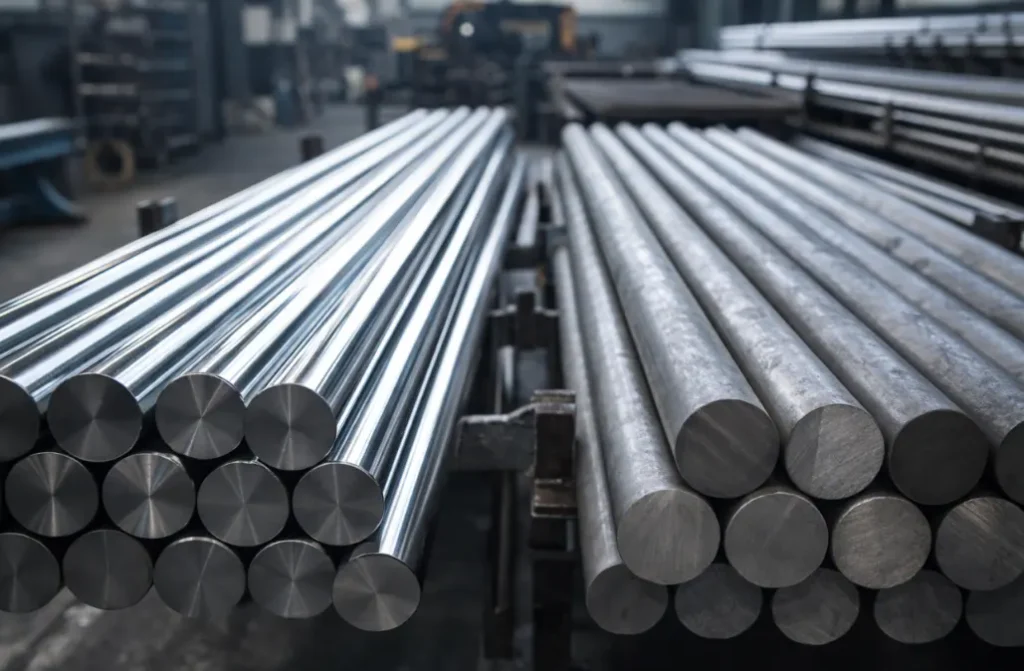
Choosing between stainless steel 430 and 304 often looks simple at first. One costs less, one resists corrosion better. Then the real questions show up. Will it rust in a humid warehouse? Will it stain near a coastal road? Will the part warp during forming or crack during pressing? The right choice depends on where you use it, how you process it, and what failure would cost you later.
Overview Of Stainless Steel 430 And 304
Stainless steel 430 is a ferritic grade. It is naturally magnetic and typically nickel free. Stainless steel 304 is an austenitic grade with meaningful nickel content, which improves corrosion resistance and formability, but also raises cost.
If you are choosing for a project, treat this as a risk trade. 430 is a smart pick when corrosion exposure is moderate and budget matters. 304 is the safer pick when moisture, chemicals, and washdowns are part of daily life.
Chemical Composition And Material Properties
Composition is not trivia. It decides why these grades behave differently in forming, corrosion, and long term appearance.
Key Chemical Elements Comparison
430 is often described as a straight chromium stainless. Many references note it typically contains chromium in the mid teens and little to no nickel. 304 is commonly known as 18/8, meaning roughly 18% chromium and 8% nickel.
Here is the practical takeaway. Nickel is expensive, and it is a big reason 304 costs more than 430.
What The Composition Means In Practice
Nickel helps 304 resist rust and pitting in tougher environments. It also helps with drawing and pressing. Kloeckner notes 304 has more corrosion resistance than 430 due to higher nickel content, and that nickel also makes 304 easier to draw or press.
430 still offers good corrosion resistance for many indoor and mild outdoor uses, but it is less reliable in harsh chemical or salty conditions. Also, ferritic 430 is naturally magnetic, while 304 is generally non magnetic unless cold worked.
Performance Differences In Real Use Cases
Specs only matter if they predict what happens after installation. The easiest way to choose is to think in scenarios. What does the surface see every day? Water? Salt spray? Cleaning chemicals? Fingerprints? Heat cycles?
Corrosion Resistance Comparison
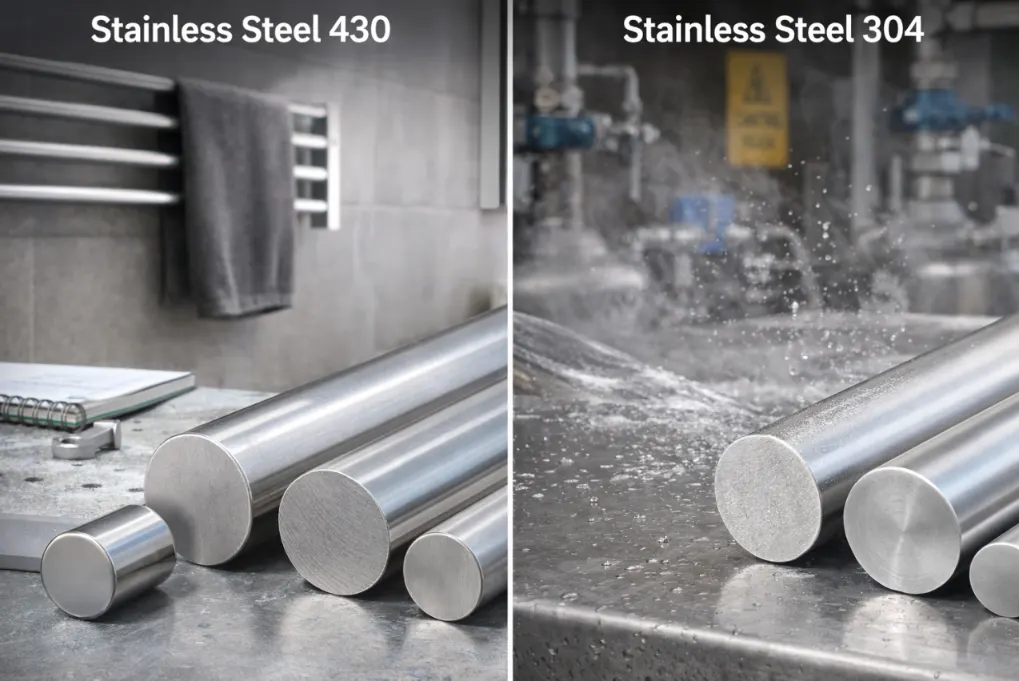
If your part lives indoors, away from chlorides and harsh cleaners, 430 can hold up well and look good. It is used widely in decorative trims and appliance type applications, and it resists oxidation, though it is less durable in harsh environments than higher grades.
If your part faces frequent washdowns, mild chemicals, or humid contamination that lingers, 304 is usually the safer choice. Its nickel content improves resistance to pitting and rust, which is why it appears in food processing and other hygiene driven environments.
A quick reality check: “outdoor” is not one thing. A dry inland outdoor install is very different from a coastal install where salt deposits sit on metal for weeks.
Formability And Fabrication Behavior
304 tends to be more forgiving in forming and deep drawing. That matters when you are stamping parts, bending complex shapes, or doing press work at volume.
430 can still form well in many operations. Some references describe its formability as good, but it may be more prone to cracking during pressing compared to 304. If your shop has tight radii, aggressive draws, or repeated rework, 304 can reduce scrap risk.
One small but common detail: if the part must be magnetic, 430 becomes attractive fast. Magnets on a fixture, magnetic catches, or sensor based positioning can make 430 the clean solution.
Temperature And Oxidation Notes
Both grades have use cases at elevated temperature, but the decision usually comes back to environment and surface stability rather than a single heat number. 430 resists oxidation and shows up in applications like trims and automotive parts. If you need a clear high temperature design limit, it is best to follow your code and the standard data for the exact product form you are buying.
Cost And Value Comparison
Cost is not only price per ton. It is also the cost of rework, warranty, and reputation when surface corrosion becomes visible. The goal is to pay for the performance you will actually use.
430 is generally less expensive than 304 because it lacks nickel. If your environment is mild and you mainly need a stainless appearance plus basic corrosion resistance, 430 can be the practical pick.
304 costs more, but it can save money when it prevents failures. If a part is hard to replace, or downtime is expensive, paying for better corrosion resistance is often the cheaper move over the lifecycle.
Application Scenarios: Best Fit For Each Alloy
Most projects do not need a perfect alloy. They need a reliable outcome.
430 often fits interior architectural trim, appliance related parts, decorative hardware, and many general purpose indoor components where corrosion exposure is controlled. If your project fits a ferritic grade, 430 stainless steel bar can be a practical choice when you want steady performance without paying for nickel-heavy alloys.
304 often fits food processing, frequent washdown environments, mild chemical exposure, and jobs where surface corrosion would be a visible failure.
To make selection faster, here is a simple decision view.
| Decision Factor | 430 Stainless Steel | 304 Stainless Steel |
|---|---|---|
| Corrosion Exposure | Better for mild environments | Better for tougher moisture and chemical exposure |
| Magnetism | Naturally magnetic | Typically non magnetic unless cold worked |
| Forming And Pressing | Can be less forgiving in heavy pressing | Easier to draw or press |
| Cost | Usually lower due to no nickel | Usually higher due to nickel |
When Not To Use 430 Or 304
This section saves headaches.
Avoid 430 when the part will see salt spray, harsh cleaners, or chemical exposure that sits on the surface. In those cases, 304 is commonly chosen for its higher corrosion resistance.
Avoid 304 when your environment is mild and the only reason you picked it was habit. That is where 304 becomes overkill. Paying for nickel you do not need is not a badge of quality. It is just cost.
If you need to compare sizes, surface finishes, or alternate alloys, browse stainless steel bar grades and forms to shortlist the right option for your drawing and environment.
Quick Decision Guide
If your job matches one of these patterns, you can usually decide quickly:
- Choose 430 if the part is mainly indoor, corrosion exposure is moderate, magnetism helps, and price pressure is real.
- Choose 304 if the part sees frequent moisture, cleaning chemicals, or hygiene driven conditions, and surface rust is not acceptable.
- If forming is complex, start with 304, then test 430 only if your shop process is stable and your environment is mild.
For pricing based on diameter, length, quantity, and destination port, you can request a quote with your spec and get a clear lead time and documentation list.
Conclusion
430 and 304 are both solid choices when you match them to the real environment. 430 is the cost effective ferritic option that fits many indoor and mild duty jobs, and it brings magnetism as a bonus. 304 is the more corrosion resistant, more formable option that makes sense when exposure is tougher or fabrication is demanding.
If you choose based on actual risk, not habit, you get a cleaner result: fewer surprises on the surface, fewer arguments at inspection, and fewer parts you need to replace early.
A Reliable Supply Partner For Your Stainless Steel Bar Needs
Qingdao Sunrise New Material Co., Ltd. is an international supplier of steel and non ferrous metal raw materials, focused on providing customized supply solutions for global buyers. The company states it has passed ISO9001:2015 quality certification and positions itself as a one stop supplier with a strong supply chain network, which helps when your project needs stable lead times and consistent documentation. Sunrise New Material also notes customers in more than 100 countries and regions, including Europe, the Middle East, South America, and Africa, which is useful if your purchase involves export packing, inspection paperwork, and repeat orders across multiple shipments. If your priority is not only material selection but also supply consistency, Sunrise New Material is positioned to support stainless steel bar sourcing with clear specs, standard compliance, and responsive coordination.
FAQ
Q1: Is stainless steel 430 the same as 304?
A: Not the same. 430 is a ferritic stainless steel, usually magnetic and typically nickel-free. 304 is an austenitic stainless steel with nickel, so it usually handles tougher corrosion exposure better. Include this difference early when you compare stainless steel 430 vs 304 for any project.
Q2: Does 430 stainless steel rust easier than 304?
A: In many real-world environments, yes. Corrosion resistance 430 vs 304 is one of the biggest gaps, especially when moisture, salt, or cleaning chemicals sit on the surface. If you expect regular wet exposure, 304 is often the safer pick.
Q3: Is 430 stainless steel magnetic?
A: Yes, 430 stainless steel is generally magnetic because it is ferritic. That can actually help in some builds, like fixtures, magnetic catches, or sensor-based positioning where you want predictable magnet response.
Q4: Can you weld and machine 430 like 304?
A: You can work with both, but they don’t feel the same in the shop. Many fabricators find 304 stainless steel more forgiving for forming and pressing, while 430 may need a bit more care on tight bends or aggressive draws. If your process is heavy on stamping, test first.
Q5: Which one should you choose for your project—430 or 304 stainless steel?
A: Start with the environment and what failure looks like. Choose stainless steel 430 when exposure is mild, you want a lower material cost, and magnetism helps. Choose stainless steel 304 when the part sees frequent moisture, washdowns, or corrosion risk and you want more margin.